
A Pacific Northwest winter is not gentle on exterior paint. From November through March, Portland, Vancouver, Lake Oswego, and the surrounding region experience sustained rainfall, temperatures that hover near freezing overnight, and humidity levels that keep surfaces damp for days at a stretch. For a home’s painted exterior, that combination of moisture, cold, and limited drying time is exactly the environment that accelerates paint failure.
The good news is that most winter paint damage is preventable. A painted exterior that was properly prepped, primed, and coated before the rainy season began will weather a PNW winter in good shape. But even well-painted surfaces benefit from seasonal attention — specific things to watch for, minor issues to address before they grow, and maintenance habits that extend the life of the paint job significantly.
This guide covers how to care for your home’s painted exterior from the time the rains arrive through the first dry days of spring.
What Winter Actually Does to Exterior Paint
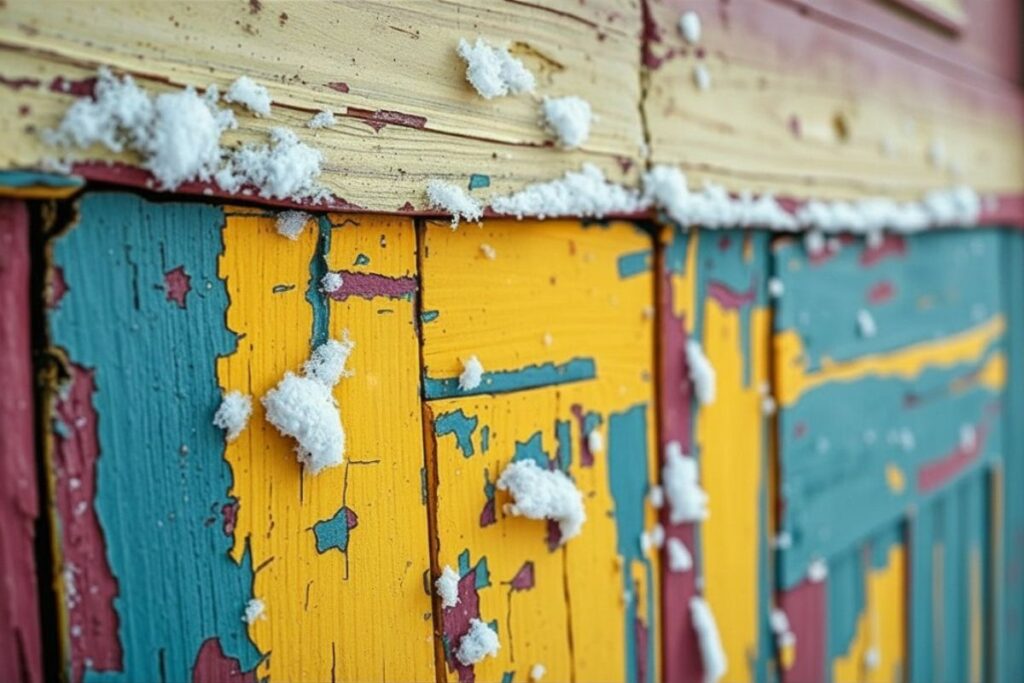
Understanding the mechanisms of winter paint damage helps clarify which maintenance steps matter most and why timing is important.
The primary threat is moisture intrusion. When water finds its way behind the paint film — through failed caulk, cracked paint edges, or unprotected end grain on wood — it saturates the substrate. As temperatures drop overnight, that moisture expands. When temperatures rise during the day, it contracts. This freeze-thaw cycling is one of the most destructive forces paint faces, and it’s a regular occurrence in the Willamette Valley and southwestern Washington from late fall through early spring.
The secondary threat is sustained surface wetness. Even without freeze-thaw cycling, paint that stays wet for extended periods is more susceptible to mildew growth, adhesion softening, and the kind of slow moisture migration that causes blistering and peeling over time. Surfaces that drain poorly, that are shaded from what little winter sun there is, or that collect debris against them are most vulnerable.
The tertiary threat is biological growth. Mold, mildew, and algae thrive in exactly the conditions a PNW winter creates — moisture, moderate temperatures, and limited UV exposure. These organisms don’t just look bad on paint; they hold moisture against the surface and can work their way into micro-cracks in the paint film, accelerating deterioration from the outside in.
Before Winter: The Maintenance Window You Shouldn’t Skip
The most effective winter maintenance happens in the fall, before conditions deteriorate. A thorough exterior inspection in September or early October — while conditions are still suitable for any necessary repairs or touch-ups — prevents minor issues from becoming major ones by March. The full fall exterior painting checklist covers this inspection process in detail, but the key items are failed caulk at windows and trim, peeling or cracking paint edges, exposed wood at any point on the exterior, and debris accumulation against siding or at grade level.
Any of these conditions allow water into areas it shouldn’t reach. Addressing them in fall — recaulking, spot painting exposed wood, clearing debris from siding contact points — costs a fraction of what the resulting water damage costs to fix after a full winter of exposure.
During Winter: What to Monitor
Once the rainy season is underway, active painting isn’t an option — surface moisture levels and temperature conditions make it impractical to achieve proper adhesion and cure. But monitoring is both possible and worthwhile, because catching a developing problem early limits how far it progresses before conditions allow repair in spring.
Watch the North and West Faces
North-facing and west-facing walls receive the least sun and the most prevailing weather in the Pacific Northwest. These surfaces stay wetter longer, dry out less completely between rain events, and show paint deterioration first. Pay particular attention to these elevations during your winter walkarounds — any new peeling, bubbling, or dark biological growth that wasn’t there in fall is worth noting for spring action.
Check Gutters and Downspouts Monthly
Gutters that overflow direct concentrated water against siding repeatedly throughout the winter. A downspout that’s detached, clogged, or directing water toward the foundation creates sustained moisture exposure at the base of walls. Monthly gutter checks during the rainy season — clearing leaves and debris, confirming downspouts are attached and flowing — protect both the paint and the structure behind it.
Pay attention to splash zones where downspout water hits hardscape or soil near the foundation. Repeated splashing against siding at grade level creates persistent moisture exposure that breaks down paint faster than open-air rainfall does.
Look for New Caulk Failures
Caulk that was intact in fall can fail during winter if it was at the end of its effective life, was applied over a dirty surface, or experiences significant movement at the joint it’s sealing. Walk around the exterior after a significant storm and look for gaps at window frames, door casings, corner boards, and anywhere siding meets a different material. A gap that opens during winter lets water in for the rest of the season.
Minor caulk repairs can sometimes be made during dry spells in winter using appropriate low-temperature caulk products, but recaulking in cold, wet conditions is challenging and the results are less reliable than fall repairs. Document what you find and prioritize it for early spring attention.
Monitor Deck and Horizontal Surfaces
Horizontal painted surfaces — decks, porch floors, window sills, and horizontal trim — accumulate standing water rather than shedding it. These surfaces take more punishment in a PNW winter than vertical siding does, and they’re often the first places where paint failure becomes visible. If you had a deck stained or painted recently, check the surface condition periodically through winter and note any areas where the finish is wearing through to bare wood.
Mid-Winter Maintenance You Can Actually Do
Active painting is off the table in a PNW winter, but there are maintenance steps that can be completed safely during dry spells without compromising results.
Soft Washing Mildew and Algae
If mildew or algae growth becomes visible on siding during winter — common on north-facing surfaces and under overhanging trees — a mild soft wash with a diluted bleach solution can slow its spread without requiring dry conditions or high pressure. This isn’t a substitute for a proper pre-paint wash in spring, but it prevents biological growth from establishing a deeper foothold over the winter months.
Use a low-pressure application and rinse thoroughly. Avoid high-pressure washing in winter — it can force water behind siding panels and into wall cavities that will take much longer to dry in cold, wet conditions.
Clearing Debris From Siding Contact
Leaves, mulch, firewood stacks, and other organic material resting against siding hold moisture against the surface continuously. In a PNW winter, a leaf pile against wood siding for three months creates conditions where paint fails and rot begins. Walk the perimeter periodically and clear any accumulated debris from direct contact with siding, particularly at grade level and in corners where material collects.
Temporary Caulk Repairs on Active Leaks
If you identify a gap or crack that is actively directing water into a wall — visible water staining inside, damp drywall near an exterior wall, or a clear breach in the envelope — a temporary repair with exterior caulk during a dry spell is appropriate even in winter conditions. It won’t be as durable or clean as a proper warm-weather repair, but stopping active water intrusion mid-winter is worth the imperfect fix.
Spring: The Assessment and Repair Window
The first consistent dry period in spring — typically late March through April in the Portland and Vancouver metro area — is the time to conduct a thorough post-winter assessment and address whatever the season uncovered. This is also the beginning of the exterior painting season, when conditions are suitable for prep work, repairs, and repainting.
Post-Winter Exterior Inspection
Walk the full exterior with fresh eyes and document everything that needs attention. Peeling paint, blistered surfaces, cracked caulk, soft or discolored wood, staining from mildew or water runoff — all of it gets noted and assessed for scope before any work begins.
Pay particular attention to areas that showed early signs of deterioration in fall or during winter monitoring. A small patch of peeling paint that appeared in November may have expanded significantly by March if moisture continued to work behind the paint film through the winter.
Prioritizing Repairs
Not every paint issue requires a full repaint. Spot repairs — scraping, priming, and touching up isolated areas of failure — can address localized problems and extend the overall paint job’s life significantly. Understanding which issues warrant spot repair versus full section repainting versus a complete exterior repaint is part of the assessment process.
If the post-winter inspection reveals widespread peeling, significant siding damage, or paint failure across multiple elevations, it’s worth getting a professional assessment before deciding on scope. GB Painting offers free consultations and estimates across Portland, Vancouver, Lake Oswego, Gresham, and Camas — reach out through the contact page to schedule a spring walkthrough.
How Paint Quality Affects Winter Performance
The maintenance steps above assume a solid foundation — a paint job applied with quality products over properly prepared surfaces. A paint film that was applied over inadequate prep, with budget-grade products, or in marginal conditions will fail faster in a PNW winter regardless of how well the exterior is monitored and maintained. The post on how long exterior house paint lasts in the Pacific Northwest covers what drives longevity in the regional climate — product selection, prep quality, and application conditions all play significant roles.
Premium 100 percent acrylic exterior paints formulated for high-moisture climates are worth the investment in the Pacific Northwest. Products like Sherwin-Williams Emerald Exterior and Benjamin Moore Aura Exterior maintain flexibility through temperature cycling, resist moisture penetration better than lower-grade products, and include mold and mildew inhibitors that matter in a climate where biological growth is a constant pressure.
GB Painting LLC has been protecting homes across the Pacific Northwest since 2015, using products and techniques specifically suited to the region’s climate demands. Browse completed projects in the portfolio or explore the full range of exterior painting services available for residential and commercial properties throughout Portland, Vancouver, Lake Oswego, and the surrounding area.
GB Painting LLC provides professional exterior painting services across Portland OR, Vancouver WA, Lake Oswego, and the Pacific Northwest. Call (503) 863-1557 or contact us online for a free consultation.